Sciatica vs. Lower Back Pain: How to Tell the Difference and Find Relief
Written by Maëva Loyson
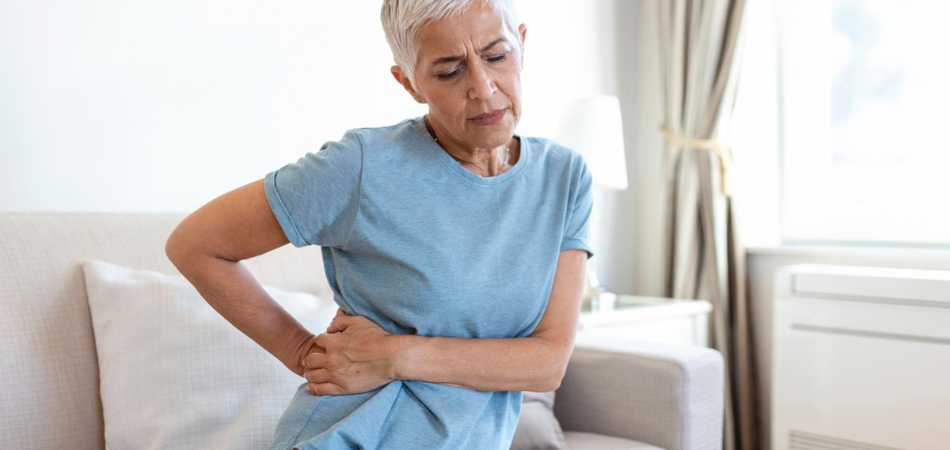
If you are dealing with lower back pain, aching in your buttocks, or pain travelling down your leg, you are not alone.
Lower back pain is extremely common, and it can have many different causes. But two terms are often used interchangeably when they are not quite the same thing: lower back pain and sciatica.
They can occur together, but understanding the difference can help you recognize your symptoms, know when to seek professional care, and understand what kind of support may be appropriate.
At Hello Osteo, we take the time to understand how your symptoms behave and how your lower back, pelvis, hips, and legs are moving together.
Lower Back Pain vs. Sciatica: What Is the Difference?
The simplest distinction is this:
Lower back pain is pain that is mainly felt around the lower back. Sciatica refers to pain and other symptoms related to irritation or compression of the sciatic nerve or the nerve roots that contribute to it.
These conditions can overlap, but they do not always have the same pattern
General Lower Back Pain
Lower back pain can come from many different structures and does not always have one clearly identifiable cause.
Muscles, joints, ligaments, discs, and other tissues around the lower back can all contribute to pain.
You may experience:
- Aching or stiffness across the lower back
- Muscular tightness or discomfort
- Pain when bending, lifting, sitting, or standing
- Discomfort that may extend into the buttocks
- Pain that changes depending on your position or activity
Lower back pain does not necessarily mean that something is damaged or "out of alignment."
In many cases, the exact structure responsible for the pain cannot be identified through symptoms alone. This is why a good assessment looks at the whole pattern rather than assuming one particular tissue is responsible.
What Is Sciatica?
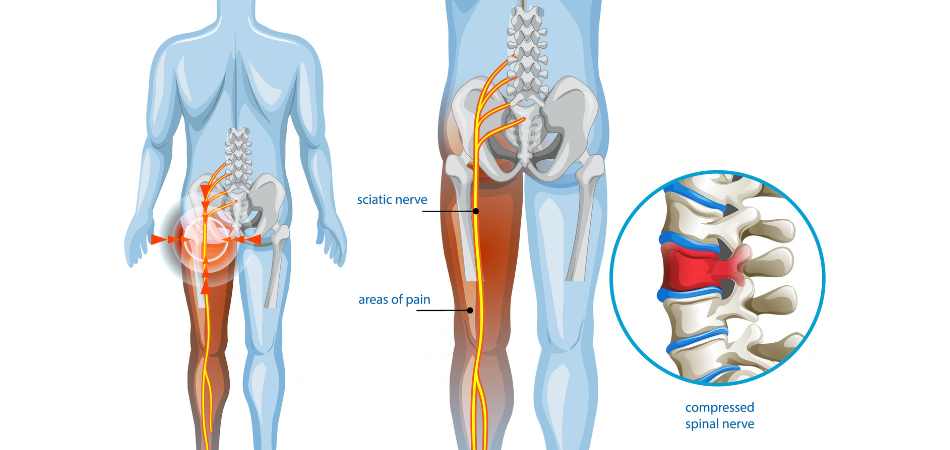
Sciatica describes a pattern of symptoms associated with irritation or compression of the sciatic nerve or its contributing nerve roots.
It most commonly affects one side of the body, with symptoms travelling from the lower back or buttock into the back of the thigh and sometimes further down the leg toward the calf, foot, or toes.
You may notice:
- Sharp, shooting, or burning pain
- Pain travelling down the leg
- Tingling or pins and needles
- Numbness
- Weakness in the leg or foot
You can have both lower back pain and sciatica at the same time.
However, if you have pain only in your lower back without symptoms travelling into the leg, it is less likely to be sciatica.
What Can Cause Sciatica?
One of the most common causes of sciatica is irritation or compression of a nerve root in the lower spine.
This can occur with conditions such as:
- A herniated or bulging disc
- Changes associated with spinal degeneration
- Narrowing around the spinal nerves, known as spinal stenosis
- Other changes affecting the structures around the lumbar spine
Not every episode of leg pain is caused by nerve compression, however.
This is why an appropriate assessment is important before assuming that pain travelling down your leg is automatically sciatica.
Why Can the Pain Travel So Far?
Nerves connect your spine with the rest of your body.
When a nerve or nerve root becomes irritated, symptoms can be felt along the pathway supplied by that nerve. This can create sensations that seem to travel far beyond the original source of the problem.
This is why someone with a problem in the lower back may experience symptoms in the buttock, thigh, calf, or foot.
The location of your pain can therefore provide useful information, but it does not tell the entire story.
What Can Make Sciatica or Back Pain Worse?
Symptoms can vary considerably from person to person.
You may notice that your pain becomes worse with:
- Prolonged sitting
- Bending or lifting
- Certain repetitive movements
- Coughing or sneezing
- Long periods without changing position
- Activities that repeatedly reproduce your symptoms
Some people find that gentle movement helps, while others need to temporarily modify specific activities.
For most people with uncomplicated back pain or sciatica, staying as active as reasonably possible is preferable to spending long periods in bed. Gentle movement and gradual return to normal activities can support recovery.
When Back Pain Needs Urgent Medical Attention
Most cases of lower back pain and sciatica are not medical emergencies.
However, certain symptoms can indicate serious nerve compression or another condition requiring urgent assessment.
Seek emergency medical attention if you develop:
- New difficulty starting or controlling urination
- Loss of bladder or bowel control
- Numbness around the genitals, anus, buttocks, or inner thighs
- Severe or worsening weakness or numbness in both legs
- Sciatica affecting both legs, particularly when accompanied by neurological symptoms
These symptoms can occur with cauda equina syndrome, a rare but serious condition involving compression of the nerves at the bottom of the spinal canal. Prompt assessment is important.
Other symptoms may also require medical assessment, including unexplained weight loss, fever or feeling very unwell, a history of cancer, significant trauma, or severe pain that is progressively worsening.
How Osteopathy Can Help
Once serious causes have been ruled out, osteopathic care may be considered as part of a broader approach to managing lower back pain or sciatica.
At Hello Osteo, an assessment may look at:
- How your lower back and pelvis move
- Hip and lower-limb movement
- Muscle tension and mobility
- How you sit, stand, walk, lift, or exercise
- Movements that reproduce or ease your symptoms
- How your symptoms are affecting your everyday activities
Treatment may include gentle manual techniques, movement advice, and exercises adapted to your individual presentation.
The goal is not simply to "put your spine back into place."
Instead, osteopathic care can be used to support comfortable movement, help you manage your symptoms, and work alongside an active rehabilitation approach.
Current clinical guidance recommends considering manual therapy such as mobilisation, manipulation, or soft tissue techniques for low back pain with or without sciatica as part of a treatment package that includes exercise.
Movement Is Part of Recovery
One of the most important parts of managing back pain is understanding what your body can comfortably tolerate.
That may mean temporarily modifying certain activities rather than stopping everything.
Depending on your symptoms, your recovery may include:
- Gentle movement
- Gradual strengthening
- Walking or other appropriate physical activity
- Changing positions regularly
- Improving confidence with movement
- Returning gradually to work, sport, or other activities
Your recovery does not have to mean waiting until you are completely pain-free before moving again.
A healthcare professional can help you determine what is appropriate for your particular situation.
When Should You Book an Assessment?
Consider seeking professional care if your pain:
- Has not improved after several weeks
- Is getting progressively worse
- Is interfering with work, sleep, exercise, or daily activities
- Keeps returning
- Is accompanied by persistent numbness, tingling, or weakness
- Makes you uncertain about what is actually causing your symptoms
An assessment can help determine whether your symptoms are more consistent with uncomplicated lower back pain, sciatica, or another condition that may require further medical investigation.

Your Pain Is More Than a Location
Lower back pain and sciatica can sometimes feel confusing.
You may feel pain in your back, but the problem may also involve your hips, movement patterns, nerves, or the way your body is responding to a particular activity.
That does not mean that every painful area has a hidden structural problem. It means that your symptoms deserve to be understood in context.
At Hello Osteo, we take a whole-body approach to musculoskeletal care, while recognizing when symptoms need medical investigation or referral.
Whether you are dealing with persistent lower back stiffness or pain travelling down your leg, the right assessment can be the first step toward understanding what your body needs.
Ready to find out what's behind your pain?
Book at Our Kingston or Amherstview Clinic
References
- National Health Service. Sciatica. NHS. NHS: Sciatica
- National Health Service. Back pain. NHS. NHS: Back pain
- National Institute for Health and Care Excellence (NICE). Low back pain and sciatica in over 16s: assessment and management (NG59). NICE: Low back pain and sciatica guideline
- National Institute for Health and Care Excellence (NICE). Low back pain and sciatica: evidence review on manual therapies. NICE: Manual therapies evidence review
Ready to take the next step?
Our osteopathic treatments are tailored to your body and goals.
Learn more about our services ->